 Skip navigation
  Previous Page


“Almost immediately after signing the agreement, the provincial government ignored the protocols, and the federal government refused to fund it in an effective way,” Pasternak says.
Her interest in land rights was sparked at 14 through a friend who was the stepdaughter of Russell Diabo, a Mohawk policy advisor and prominent Indigenous rights activist. Her conversations with Diabo influenced her decision to study Indigenous issues as a student, and then as an academic, first at Trent University and, since July, at Ryerson, where she teaches in the Indigenous justice stream. She is currently a principal investigator in a SSHRC-funded study on how First Nations communities can leverage their underlying title in defence of their lands and the encroachment of the resource sector.
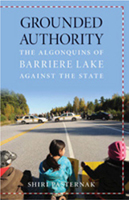
After Diabo introduced Pasternak to the Algonquins of Barriere Lake she co-founded Barriere Lake Solidarity, a network of supports outside of the region. In 2009, Pasternak started writing Grounded Authority, in which she chronicles attempts by those in power to delegitimize land negotiations and terrorize the Algonquins through police brutality and false accusations of child sex abuse, financial misconduct and political corruption. Recently, after 26 years of fighting, the band achieved a breakthrough with the province, which has agreed to honour the Trilateral Agreement (laying the groundwork for co-operative development of an integrated management plan for the region), but still can’t make headway with the federal government.
“There is a real lack of political will among the federal Liberals to make meaningful changes in Indigenous communities,” Pasternak says. “But the Algonquins of Barriere can wait out any number of governments because of the strength of their community, which continues to be passed down from one generation to the next.” 
