 Skip navigation
  Previous Page


GOULD STREET
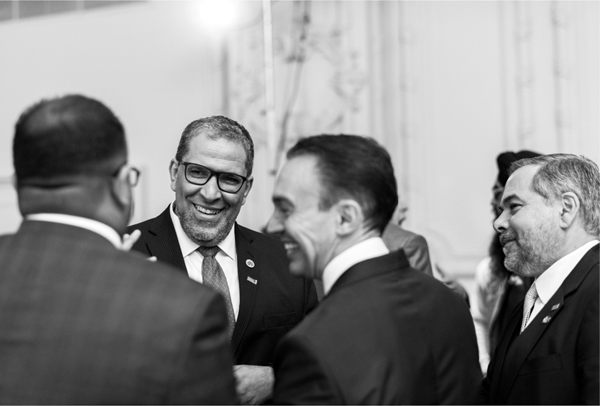
“We were living in Lebanon, and there was no education or resources – either way, you would come out of Lebanon with nothing,” said Mahmoud Al Rassoul, a father of eight. “I had a choice, but I wanted to leave Lebanon, because there is no education and no future there. They asked if I wanted to go to Canada, and I agreed. Everything changed for my kids.”
“I liked Canada the second I came here,” says Ghader Bsmar, a mother of two. “I can study and pursue my goals. When I was back in Syria, I left high school and got married. Here, it feels like I’m important.”
RULSC continues to support Syrian refugees through volunteer committees offering translation/interpretation, financial literacy training, peer mentoring, tutoring and employment assistance. “It’s a new life, a new community, a new society,” said Hawa. “You have challenges; you need to know the environment very well; and it was a challenge for me, for my wife and my children as well. They have to study to change their language. RULSC helped me by sponsoring me.”
—Will Sloan
RESEARCH
Scholar explores immigrant experience
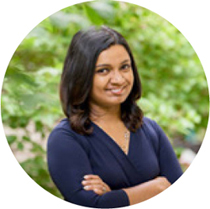
Vathsala Illesinghe, a PhD candidate in policy studies, has spent her career researching violence against women, but since moving from Sri Lanka to Canada in 2013, the immigrant experience has given her work a broader scope. As one of 15 Canadian doctoral scholars named as a 2017 Pierre Elliott Trudeau Foundation Scholar, she’ll explore the intersection between violence and immigration policy.
“I’ve met many immigrant women who have decided, now that their lives have changed, they will adjust their plans and career paths,” said Illesinghe. “They will become accustomed to their new life and work, however precarious it may be—and as a result, find themselves in vulnerable positions, and also remain and become entrapped in them.”
Illesinghe seeks to identify immigrant and refugee women’s vulnerabilities: “Not only violence, but also becoming entrapped—being stuck in a place where they never imagined themselves to be. To fully understand immigrant and refugee women’s experience of violence and how immigration policies shape that experience, requires a new look at a complex set of interrelated social, economic and political factors.”
