 Skip navigation
  Previous Page


Applied research
Dean Vanessa Williamson shares her insights.
p. 12
Seneca love x 50
Fun facts about Seneca and grads like David Common to mark our birthday.
pp. 14-15

PRO FILES

HELIX entrepreneurs
A “Ripple” effect on sustainable farming
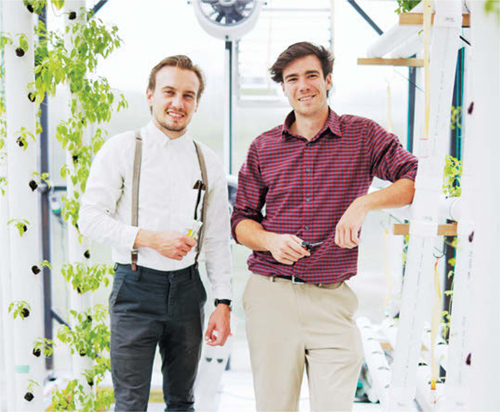
WHEN BRANDON HEBOR and Steven Bourne quit their day jobs to start a green sustainable venture together, you could say they had bigger fish to fry.
Graduates of the Sustainable Business Management (SBM) program, Brandon and Steven have been working out of a narrow shipping container parked at the Evergreen Brick Works in Toronto. Most of the square footage inside the container is taken up by an aquaponics system they built themselves, including two 300-gallon fish tanks.
The fish—about 150 tilapia—are the biological engines of Ripple Farms, a foodgrowing project based on fish poop and developed at Seneca’s on-campus incubator, HELIX.
“HELIX has been with us from the start,” says Steven. “We’ve been connected with people from a wide array of disciplines, helping us navigate through this startup. We would be months behind without their advice and mentorship.”
Ripple Farms features the first urban farming unit of its kind in Canada with a greenhouse built upon a shipping container. Recently, SBM students took a field trip there to learn about aquaponics—the combination of fish farming with soil-less plant cultivation to produce organic food—and about Ripple Farms as a social enterprise dedicated to putting people before profits.
The trip was sponsored by Seneca’s Alumni Student Experience Fund, which provides students experiential learning opportunities that connect them with successful grads like Brandon and Steven.
Since launching last November, Ripple Farms has supplied its produce to top restaurants in the Toronto area that value a “farm-to-fork” motto. It has received a SmartStart grant from the Ontario Centres of Excellence to implement new technologies and create opportunities for ongoing research and unit sales. As well, support from the Greenbelt Fund will help Brandon and Steven with Local Lime Syrup, a new product line made from a waste by-product of their system to “close the loop” on sustainable farming practices. Best of all, a Ripple Farms unit is now operating at Newnham Campus.
Are you an entrepreneur, looking to develop your idea? HELIX supports entrepreneurship in all sectors, with a focus on innovative health and lifestyle products and services. Learn more: senecacollege.ca/helix
